
Next Steps for US-Russian Treaty Negotiations: INF
In the six months since the conclusion of the International Student Conference on Global Affairs, the situation between Russia and the US has evolved: Biden was elected as the 46th President of the United State and both countries agreed to extend the New START Treaty. Though the game pieces have changed, the board is the same. The US and Russia remain locked in a geopolitical battle of wills that must be carefully managed on both sides to prevent descent into conflict.
At our conference, students from the US and Russia championed a five-year extension of the New START treaty, a feat accomplished earlier this month. Though this extension does provide some stability and curtails arms buildup, more must be done to increase trust and transparency and to reduce the number of weapons in each country’s arsenal. It is now time for the US to push a second suggestion that was unanimously adopted by conference attendees: the re-ratification of the Intermediate-Nuclear Forces (INF) Treaty.
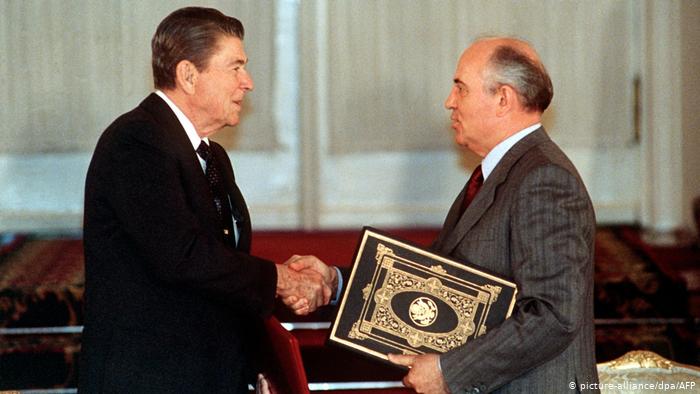
The INF Treaty, first signed on December 8, 1987, banned ground launched cruise missiles with 500-5,000-kilometer ranges, as well as all support equipment. Over its lifetime, the INF treaty resulted in the destruction of 2,692 missiles. On August 2, 2019, the United States, under the direction of the Trump administration, officially withdrew from the treaty, citing numerous Russian violations. US DOD officials confirmed that US withdrawal from the treaty would allow the US to actively pursue development of ground launched conventional missiles as a check against developing Russian and Chinese capabilities.
The US position is not without merit. Mutually Assured Destruction, or MAD, is the theory that nuclear exchange has been prevented by an arms race that began between the US and USSR during the Cold War. When the stakes are as high as a global nuclear conflict, states are inclined to behave more predictably and seek policies that deescalate tensions. If Russia has violated the INF by developing ground launched cruise missiles, there is an argument to be made that the balance of power has shifted by growing Russian capability to strike at the US and its allies.
While hard power has certainly helped prevent conflict escalation, particularly during the Cold War, ICSGA participants noted the outsized role that international treaties have played in bringing actors to the table, forging cooperation, and establishing global rules that help create and maintain peace. The US’ recent withdrawal from many long-standing treaties, especially those relating to nuclear arms, is concerning. It threatens the fragile stability that has prevented conflict for decades. As long as the US and Russia engage in an arms race, the world is at risk of a miscalculation that could be catastrophic for millions of people. At the very least, an arms race, though providing some short-term comfort, ultimately does not set the stage for cooperation which hinders progress on a number of fronts that affect both countries including the environment, human rights, and economic growth.
Now that the US has re-signed the New START treaty, the Biden administration needs to use the momentum to explore re-engagement of the INF. ICSGA made two additional recommendations for INF negotiations:
• Strengthening of verification measures to ensure that both parties are comfortable.
• Extend an invitation to China to regulate their expanding arsenal.
The United States and Russia have a long way to go to repair their relationship. Both countries, at times, have competing goals that require mediation, rules, and structure. For this reason, the US and Russia must rely upon mutually agreed upon treaties with strong enforcement mechanisms to help navigate complex issues. Re-entry into the INF would not only help strengthen the arms control treaty regime governing nuclear weapons, but would also give both countries another forum to engage with one another in an effort to spark long-term cooperation.